
Articles & Analysis.
Practical, legally grounded analysis of the cyber, privacy and technology issues affecting Australian businesses — written by practitioners who advise on these matters every day.
Our articles are written for the people who carry responsibility in their organisations — general counsel, chief risk officers, CFOs, business owners and directors who need to understand what is happening in cyber and privacy law and what it means for them.
We write about Australian law, Australian regulation and Australian cases — because that is what our clients face. When a new piece of legislation passes, a significant breach makes headlines or a court decision shifts the liability landscape, we explain what it means in plain terms and what your organisation should consider in response.
Our content is not marketing. It is the same quality of analysis we bring to our advisory and legal work — offered here so that you can stay informed between engagements.
FEATURED

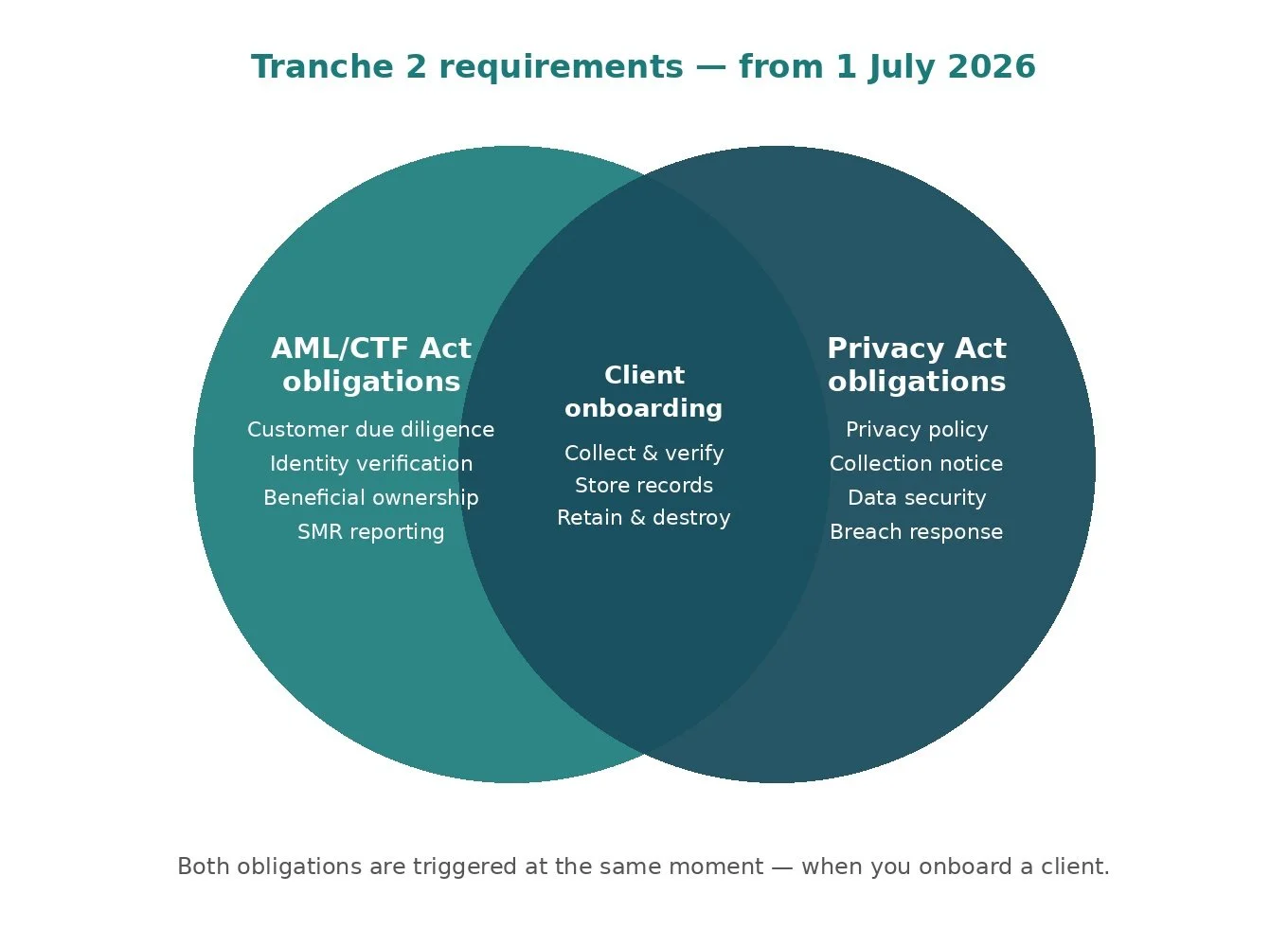
The compliance obligation hiding inside the Tranche 2 AML reforms
From 1 July 2026, an estimated 90,000 Australian businesses become reporting entities under Tranche 2 of the AML/CTF reforms. Most have been focused on the anti-money laundering obligations themselves. Far fewer have noticed what arrives at the same time: for most of these businesses, 1 July also marks the first time the Privacy Act 1988 (Cth) has ever applied to them.

When AI goes wrong – safeguarding your practice from GenAI risks
While GenAI tools present opportunities for faster research and drafting, for example, they also introduce significant risks that Australian solicitors need to manage. Recent cases across multiple jurisdictions demonstrate the potential for serious consequences in the event of improper use of GenAI. This article examines these risks and provides practical guidance for law firm managers to implement appropriate safeguards and maintain professional standards within their law practice.

Digital ID in your practice: A Guide for Firms and Their Clients
The Australian Government’s Digital ID Scheme is being expanded to encompass state governments and the private sector via a newTrusted Digital ID Framework. For law firms, Digital ID can streamline identification processes and reduce risks.

Australia’s largest law firm data breach - Lessons for the legal profession
The 2023 cyber incident affecting HWL Ebsworth was hardly the first data breach to have an impact on an Australian legal practice, but it was the largest and most devastating in terms of impact across individuals and sectors.

8 reasons why business email compromise is a risk for trustees
Business email compromise is an insidious and increasingly common means of fraud that poses a threat to any businesses, especially law firms, that act as trustees in large transactions.

Solicitors' duties in the digital era - is there a duty of technological competence?
Even without a formally recognised duty of technological competence, such a duty might be inferred by an Australian court having regard to reported levels of cybercrime, other professional duties and the official warnings by regulatory bodies.

Eight reasons why cyber threats are now a key risk for property practitioners
The choice between paying a ransom and either losing all your business records or seeing confidential client information lost or published is one that no practitioner ever wants to make.

Cyber extortion – legal and ethical considerations if you receive a ransom demand
The choice between paying a ransom and either losing all your business records or seeing confidential client information lost or published is one that no practitioner ever wants to make.

The insurance jigsaw puzzle – how different policies respond to cyber events and email fraud
Three types of insurance – PII, cyber and crime cover may be required for comprehensive protection.

Cyber risk for lawyers: a unique form of professional risk
Cybercrime is challenging organisations everywhere, with daily news stories about businesses, government organisations and even global IT companies that have been hacked. Law societies and insurers have been warning lawyers about cyber risk, in particular…

Professional duties and email security for conveyancers
Conveyancers have been early adaptors of electronic conveyancing, which has been mandatory for all mainstream property transactions in NSW since 1 July 2019. With the commencement of this new era it is timely to consider the lessons that have been (and can still be) learned about cyber risk and resilience in conveyancing.

Protecting client confidentiality in the digital era
Cyber risk may be a modern phenomenon, but the old adage about an ounce of prevention being better than a pound of cure still applies.

Owning your practice’s cyber security - MSPs and you
Be proactive in understanding your practice’s cyber security profile – do not regard it as a ‘set and forget’ issue.

Practical guidance for managing cyber risk
Managing cyber risk is now an integral part of legal practice, and law firms should consider both risk management and risk transfer via insurance when planning cyber risk response.

Transitioning to e-conveyancing
From 1 July 2018, all caveats and land transfers without mortgages in NSW have been lodged electronically, and this will be extended to all mainstream property transactions from 1 July 2019.

How cyber resilient is your law practice?
Our article by Simone featured in the Law Society Journal, December 2018. Click though to read the full article where Simone discusses the types of scams impacting legal practices, and how they actually work. She highlights possible dangers in outsourcing responsibility for cyber resilience to external IT consultants and, how do different insurance policies respond?

Privacy compliance
Further information is contained in the linked article, written in 2017 for Lawcover’s risk page in the Law Society Journal under the title ‘Is your firm privacy compliant?’.

Cyber Security for lawyers
Podcast: Panel discussion on Cyber Security for lawyers, featuring Simone as one of the panellists.
Our resources may be accessed for non-commercial or personal use only. No part of this website or its content — including publications — may be copied, used, adapted, published or distributed without the prior written approval of Law & Cyber. For details see our Website Terms of Use.