
Stay across what matters.
Cyber law, privacy regulation and technology governance are moving faster than most organisations can track. Our mailing list keeps you informed — without the noise.
We publish updates when there is something worth saying: a significant regulatory development, a new piece of legislation, a court decision that shifts the risk landscape, or a threat trend that Australian businesses need to understand.
We do not send a fixed newsletter on a fixed schedule. We write when there is something genuinely useful to share — which means when something arrives in your inbox from us, it is worth reading.
Analysis of new legislation and regulatory developments affecting Australian businesses
Plain-language summaries of significant cyber incidents and what they mean for your organisation
Updates on our latest articles, media appearances and courses
Occasional invitations to events and webinars
Recent Insights

Generative AI has now featured in disciplinary outcomes, waiver of privilege findings and a landmark Supreme Court oppression case. However, avoiding the use of gen AI isn't the answer. Every practice area needs to be able to answer one question: could you explain and defend how it was used, if someone asked?

Law & Cyber’s previous article on camera glasses and the statutory tort of serious invasion of privacy drew a large volume of comment. The same questions came up repeatedly, and the short answers are set out below. More detailed discussion concerning the elements of the tort, the remedies available, the time limits and the exposure organisations carry are dealt with in full in the original article.

Kmart reportedly sold out of its $89 Anko camera glasses within days of putting them on the shelf. Meta's competing range starts at around $469 and is being pushed hard into the Australian market with celebrity endorsements. Electronic Frontiers Australia has called for a recall and a regulatory ban, describing the devices as cheap, covert recording devices.

Twelve months ago, Australian lawyers were asking whether they needed an AI policy. That question has been clearly answered. On 16 April 2026, Chief Justice Mortimer issued the Federal Court’s General Practice Note on Generative AI (GPN-AI), applying to everyone in proceedings: lawyers, litigants, witnesses and third parties. The NSW Supreme Court’s Practice Note SC Gen 23 has been in force since 3 February 2025. The Supreme Court of Victoria has issued its own Guidelines for Responsible Use of Artificial Intelligence in Litigation.
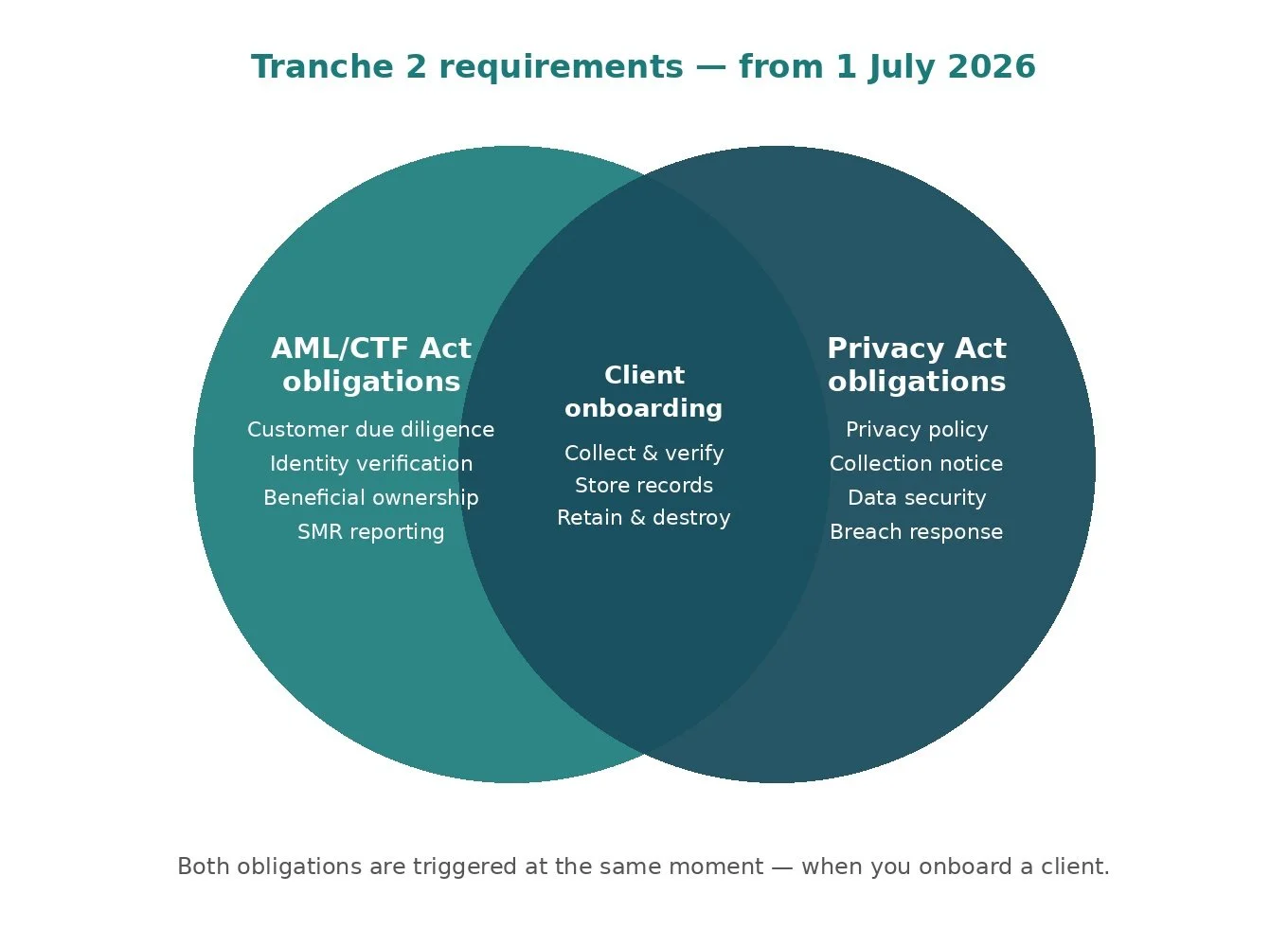
From 1 July 2026, an estimated 90,000 Australian businesses become reporting entities under Tranche 2 of the AML/CTF reforms. Most have been focused on the anti-money laundering obligations themselves. Far fewer have noticed what arrives at the same time: for most of these businesses, 1 July also marks the first time the Privacy Act 1988 (Cth) has ever applied to them.

While GenAI tools present opportunities for faster research and drafting, for example, they also introduce significant risks that Australian solicitors need to manage. Recent cases across multiple jurisdictions demonstrate the potential for serious consequences in the event of improper use of GenAI. This article examines these risks and provides practical guidance for law firm managers to implement appropriate safeguards and maintain professional standards within their law practice.

The Australian Government’s Digital ID Scheme is being expanded to encompass state governments and the private sector via a newTrusted Digital ID Framework. For law firms, Digital ID can streamline identification processes and reduce risks.

As Australia heads into 2025, sweeping reforms are transforming our digital landscape. The landmark Cyber Security Act 2024, alongside major privacy and Digital ID reforms, signals a significant overhaul of Australia's digital regulations. From mandatory ransomware payments reporting to enhanced privacy protections and a new Digital ID framework, these changes set clear expectations for how organisations handle cyber threats and personal information. With implementation deadlines approaching, businesses and government agencies face crucial decisions about compliance and digital security. Discover how these reforms will reshape Australia's digital future and what your organisation needs to know to prepare for the changes ahead.

To mark Privacy Awareness Week from 6 to 12 May 2024, we’re sharing Privacy Act updates with important legal changes that may impact your organisation.
AML/CTF Tranche 2 reform has generated significant attention across the legal profession. What has received far less focus is the privacy consequence that arrives with it. For many law practices, 1 July 2026 does not just mark the start of anti-money laundering obligations, it marks the first time the Privacy Act 1988 (Cth) has ever applied to their practice.